
Winta Yohannes
33, Executive Director at Albina Vision Trust
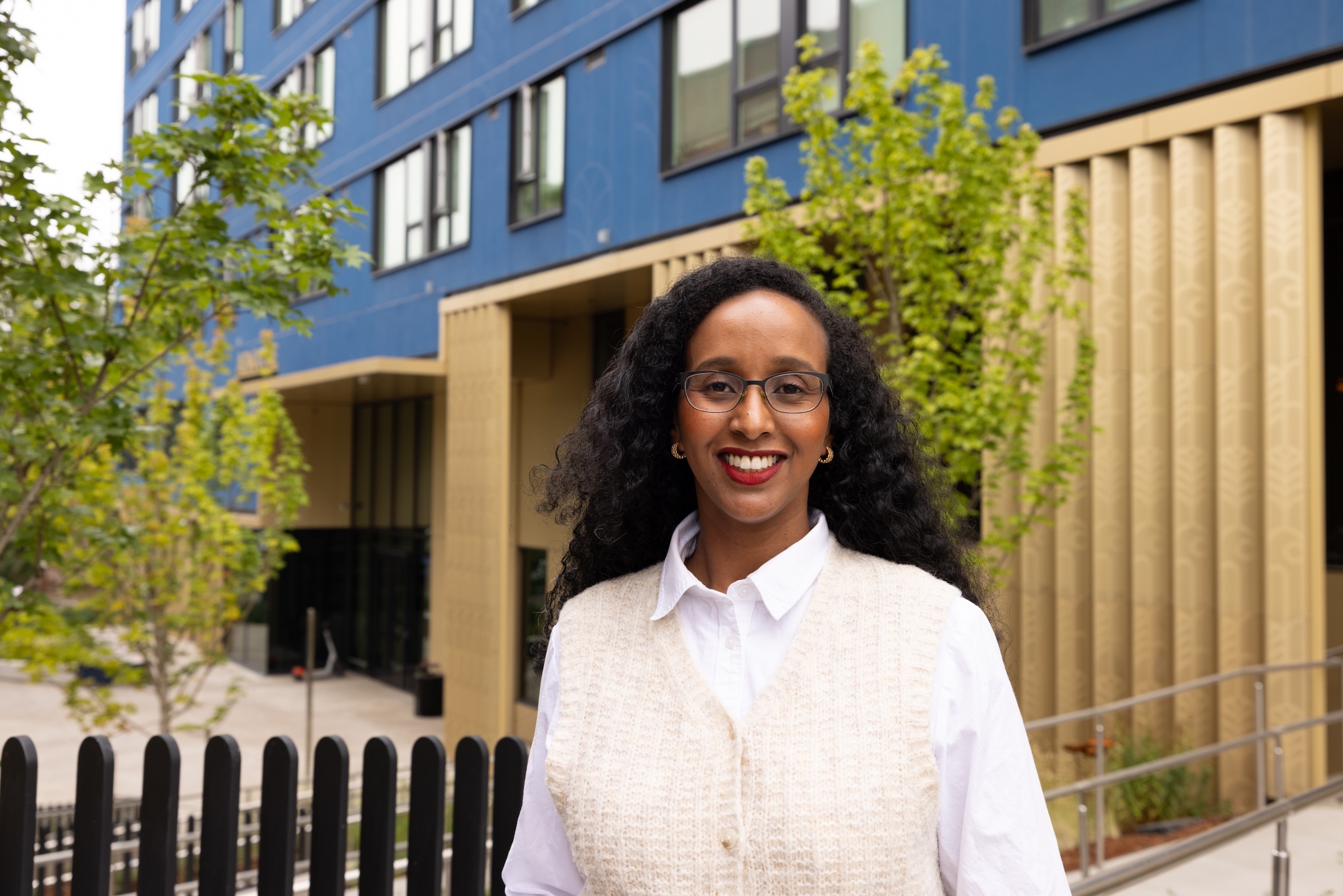
2026 Prize Winner
In the decades leading up to the 1960s, the North Portland neighborhood known as Lower Albina was a hub for Black community and culture. Four out of five Black Portlanders called the area home, with dozens of Black-owned businesses and a dynamic jazz and R&B scene flourishing with them. All of that changed in the intervening years as redlining and other racist policies pushed Black families to the outskirts of the city to make way for the expansion of Interstate 5 and the construction of Veterans Memorial Coliseum and Portland Public Schools’ main headquarters.
This stain on the city’s legacy has only recently started to fade thanks, in part, to the efforts of organizations like the Albina Vision Trust. Formed a decade ago, the nonprofit is, as its website states, “repairing generations of damage done and restoring the residential fabric of the district” through innovative development projects that are already rebuilding the community for Black Portlanders. And helping lead this bold vision is AVT’s executive director, Winta Yohannes.
“The same way that Portlanders have inherited this legacy of destruction that has resulted in this underutilized part of the city,” she says, “we’ve also inherited a generational opportunity to rebuild it. Once the initial vision was set, there was a recognition that there needed to be an entity whose job would be to lead its implementation.”
Yohannes, 33, arrived at the trust nearly seven years ago after previously working as senior policy adviser for then-Portland City Commissioner Chloe Eudaly. Among her achievements was the creation of a program to support business owners of color who were seeking licenses to sell cannabis products in the city and a legal defense program for immigrants.
Since joining Albina Vision Trust, Yohannes has helped develop a bold platform that not only emphasizes the connections between building affordable housing and growing generational wealth, but also addresses environmental concerns and sustainability. Progress has been slow and steady for the organization with its biggest victory happening just last year with the opening of Albina One, a 94-unit apartment complex that offers its residents affordable rent, million-dollar views of the city, and access to all manner of educational programs and support.
“It was the first time we welcomed Black families back home to Lower Albina in 40 years,” Yohannes says. “It is the physical manifestation of 15 years of community vision. The feedback that I have appreciated the most is when I hear from parents that it’s the place their children can’t wait to show off to their friends. When we can demonstrate to Black children that we love them and we want them to feel a sense of ownership in this city, that will have a transformational impact.”
Yohannes will likely have more to celebrate soon. This past September, the trust was granted the opportunity to negotiate for the purchase of city-owned land around the Rose Quarter. The organization is also already working to find a new home for Portland Public Schools’ headquarters and have the right of first offer to purchase PPS’s current 10.5-acre home on North Dixon Street.
“This is one of Portland's most important civic projects,” Yohannes says. “This is a place where people can share their most grand visions and aspirations for how we live together, what we build, what it means to be a Portlander, and what kind of future we want to inhabit together. We can hold both courage, imagination, and action. All of us have inherited this generational opportunity, and it's so much bigger than Albina Vision Trust. We are the stewards of that vision.”
Photo by JP Bogan
Profile by Robert Ham